Tuesday, 18 November 2014

Belle directed by Amma Asante


I have recently seen "Belle" which I particularly enjoyed not only because of the story behind the whole plot but also because it is set in a time of legal significance in regards to the slave trade and in particular to the well known Zong massacre and the killing of an estimated 132-142 enslaved Africans preceding the subsequent claim from the insurers for the loss of the slaves (accounted for as the  ship cargo).


Though fictional "Belle" is said to have been inspired by the 1779 painting of Dido Elizabeth Belle (beside her cousin Lady Elizabeth Murray) and the evidence that the illegitimate mixed race daughter of a Royal Navy officer, John Lindsay and an enslaved African woman from the West Indies was entrusted to the care of William Murray, 1st Earl of Mansfield, uncle of the previously mentioned officer.


"The weave of the personal and the political finally proves as irresistible as it is moving, partly because it has been drawn from an extraordinary life."
 
 
Belle does have a clear moral compass, but it refuses easy answers and withholds easy judgments. As such, it feels profoundly human."
 
 
"Beautidully cast, touchingly played and handsomely mounted."


Monday, 10 November 2014

On The tao of travel : enlightenments of lives on the road by Paul Theroux (Portuguese edition by Quetzal)


I have just finished reading a book I was recently given by some of my students, who know how fond I am of travelling and although I haven't been reading much in Portuguese lately, (particularly if any of the given authors happens to write in one of the languages I can speak), I did enjoy it.

 
I wasn't expecting it to be a collection of extracts by authors who have done a bit of travelling themselves, which is understandable once the Portuguese title does not entirely correspond to the full title in the English edition "enlightenments of lives on the road" (missing in the Portuguese edition).


I read it as a romance, though I feel I should have read it at regular intervals and not necessarily in one go, but having always liked quotes, as well as extracts from adventurous authors it didn't affect its reading, having allowed me to "revisit" some quotes I had read in the past.

 
Prior to having started travelling (in the real sense) I had already "travelled" a bit whilst losing myself in the descriptions of other people's travels and even some of my multiple penfriends' from all over the world as a teenager (theoretically trying to conquer my fear of the unknown yet being drawn to it).

 
Having become a fairly young mother interfered with my willingness to cross the borders and despite having accepted that fact as part of what would probably no longer be Fernão de Magalhães'  well known quote kept on surfacing "the sea is  dangerous and its storms terrible, but these obstacles have never been sufficient reason to remain ashore ... unlike mediocre, intrepid spirits seek victory over those things that seem impossible (...)".

 
My first "real" trips started when the enterprise I was working for had me represent its interests in various European countries and I decided to stay longer to "explore" those same countries at my own pace and without any other concerns than to do it my own way ..., that's when the introspective and humble aspects of travelling "kicked in" - "Travel can be one of the most rewarding forms of introspection" (Lawrence Durrell) ; "Travel makes one modest. You see what a tiny place you occupy in the world" (Gustave Flaubert) and more so when I started travelling to Africa and staying over for much longer periods of time.

 
Over the course of years, whilst exploring farther away places  I realised the impact  Ralph Waldo Emerson's phrase had had on me and to which extent it did convey the truth behind the act of travelling, as I saw it  -"Though we travel the world over to find the beautiful, we must carry it with us or we find it not."
 
 
I can clearly understand Robert Louis Stevenson's "For my part I travel not to go anywhere, but to go. I travel for travel's sake. The great affair is to move" because I do often feel it myself. In spite of having always enjoyed travelling on my own I have been on quite a few organised circuits over the last eight years and  on a few trips accompanied by my youngest daughter, whom I have "instilled" the curiosity to travel. I do strongly believe in  Hodding Carter's " Two of the greatest gifts we can give our children are roots and wings".


Sunday, 9 November 2014

O Guardião do rio (The guardian of the river) at Teatro Trindade, Lisbon - The 9th of November 2014


The play Mia and I had the privilege of seeing this afternoon could have easily been a simple play had it not been for the one actor on stage, Ivo Bastos, who majestically interpreted the role of a person subject to tedium, who in turn created his own inner voices and gave them a voice of their own.


The on-going dialogues which flow from within his head take the shape of puppet figures, whose personalities are as interesting as the one of our multi-directional on-stage actor, whose voice changes according to the voices of those he impersonates, from  two old villagers from the upper and lower village divided by the river "our" actor has been made the guardian of to a psychiatrist who has been called in to help him through and who himself has developed a different inner voice from his own.


"The guardian of the river" which has been written and staged by Ricardo Alves is said to be an amusing schizophrenia- like exercise made real by the co-existing relationship between the actor and the multiple characters, whether they are puppets or not. 


This play makes us laugh and yet wonder what tedium is about and what it can lead us to ... it makes us also thoroughly think about the role Theatre plays (can play) in our lives and what actors are in essence.
 
Ivo Bastos, whom I had never heard of, deserves to be mentioned and recognised as the "soul" of this "exercise.


Text and stage setting: Ricardo Alves
Actor on stage: Ivo Bastos
Stage photography: Pedro Vieira de Carvalho
Sound setting and original music: Rodrigo Santos
Technical setting: Joana Caetano


Saturday, 8 November 2014

Zwei Leben by Georg Maas


I have been to see a very good Norwegian German produced film "Zwei Leben" (Two lives) on the disruption of a life built on lies, dissimulations, stealing of identities and every possible devious approach liable to bring out an emotional story based on a true fact related to World War II and the so called "shame children", in this particular case a child born from a relationship between a Norwegian woman and a German occupation soldier.


Though I am not  commonly used to reading the subtitles, which I find to be a distractor, I had to this time during the dialogues in Norwegian, though not necessarily in those carried out in German and yet despite this fact I managed to get deeply involved in the film sequencing which turned out to be more than a simple drama or a thrill type of film.


The interpretation was second to none and for me, similarly to many others from my generation I believe, an utterly good surprise to see Liv Ulman I hadn't seen for such a long time playing one of the characters. 


Not having read or heard of the former DDR involvement in regards to the "shame children" before and thus not being able to determine the extent of the truth conveyed in the film I can nevertheless say that even if it was partly true it must have been very hard for the parties involved - those who lost the children, those who looked for the parents, the ones who "got in-between" and all who unknowingly got caught up in the web of lies.


Friday, 7 November 2014

Challenging one's limits ...


It was a fairly hard working week in which I had to challenge my own limits. I don't normally like to have to concentrate myself on the English Language development of different groups simultaneously for fear of not being able to pay the necessary attention to each of every one of them, particularly because the syllabi of the Aviation oriented courses are too demanding to be taken lightly.
 
 
For reasons that went beyond my control, as I was still teaching an abinitio group of air traffic controllers I was asked to take on another group, this time of communications and aeronautical operators, which not only further added to my already overburdened timetable but also contemplated a total immersion type of approach I personally don't feel adequate bearing in mind the long term main objective of this type of refresher courses. 
 
 
I had to readapt my whole concept of teaching and reinvent myself as a communicator so as to accommodate this type of approach without having the students demotivated and tired.  


We have made it through to the end in what was at times a challenging of our own limits ... but we (the students and I) were both particularly happy with the final outcome ...


Tuesday, 4 November 2014

Salam Ouessant by Azouz Begag


Carrying a hard cover book in one's handbag, so as to read it during the long bus and subway rides may not be handy, this being the reason why I bought a few pocket books to help me face the often fastidious hours spent on them.
 
The synopsis of Salam Ouessant appealed to me and despite knowing nothing about its author (shame on me) the moment I started reading it not only did I fall for Azouz Begag's style of writing interspersed by poetical-like thoughts that had me ponder on life's objectives in general and cultural inheritage related aspects as well but also children-parents relationships whenever one of the parents is estranged. 
 
I read the book in three days and have had an enormous curiosity in reading some of the books already edited by this French-Algerian author since then.


"De mon père je tennais cette philosophie: ne partager avec les autres que le meilleur de soi et garder ses malheurs au fond, sous la godasse, jusqu'à ce que le temps les réduise en poussière, parce que le malheur est le plus grand dénominateur commun entre les humains. Alors il vaut mieux que chacun garde sa part pour soi, sinon notre besoin de consolation ne s'apaise jamais."


"Si on ne met pas de mots sur les choses, ells n'existent pas. Chaque mot, une chose. Pas de mots, pas de choses. Elles n'existent pas. Elles restent sur le seuil comme des idées, des augures."


Sunday, 2 November 2014

Treasures from the Royal Palaces of Spain - a temporary exhibition at Calouste Gulbenkian Museum ... and ... or memories of a treasured past ... - The 2nd of November 2014


Having been made aware that the Calouste Gulbenkian Museum in collaboration with the National Patrimony of Spain was exhibiting 141 works of Art pertaining to the Royal Palaces of Spain, Mia and I decided not to miss this extraordinary opportunity, and more so because the exhibition was said to focus on the Art which emerged in the Iberian Peninsula over a period of 350 years in which matrimonial and cultural ties between both Portugal and Spain can be accounted for.
 
I believe most people who visited it were specifically looking for the well known Caravagio's painting "Salomé with the Head of Saint John the  Baptist, despite being the only work by this painter to be owned by the Spanish Patrimony.  


The two Museum Galleries where the works of Art were in display were overcrowded and again particularly around paintings by well known artists such as Zurbaran, Titian, Francisco de Goya and El Greco.


From images of various palaces to religious artefacts, armoury and even a tapestry the temporary exhibition was divided into epochs but I do believe the portraits must have outnumbered any other representations. Among those I was taken by the one of Joanna of Austria (the founder of the Monastery of las Descalzas Reales), her son King Sebastião of Portugal and her niece Isabel Clara Eugénia, as well as the one of Maria Isabella of Braganza (Queen of Spain and founder of Museo del Prado), maybe because of their Portuguese origins and the role they played in the History of Spain. 


As we walked back into the Museum Hall a free entrance jazz concert was going on, so we listened in for a while until we decided it was time to stroll in the Museum's gardens (which used to be "my" garden of election when Mia and Faye were toddlers) with a  black and white photo exhibition in place, though neither of us figured out what it really was.


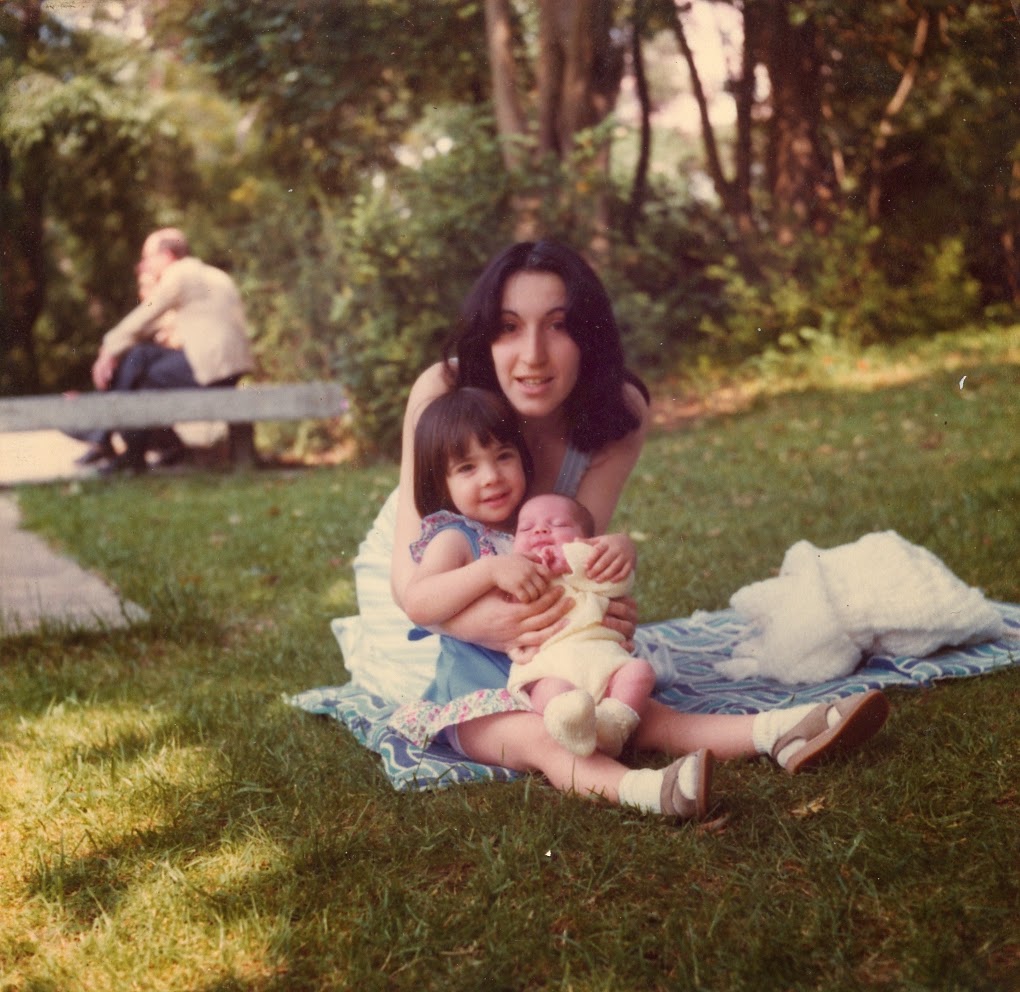
Despite the weight of Faye's absence in our lives ... we managed to revive some of the memories and even laugh as we remembered a few of them ... Long gone precious moments that will always linger on and that we will treasure forever ...