Saturday, 26 October 2013

The last frontier - Lisbon in War time - Temporary exhibition at Torreão Poente, Praça do Comércio, Lisbon - The 26th of October 2013


We often forget the role Portugal played during the  World War II once having declared its neutrality in September 1939 became the "last frontier" and a gateway to the Atlantic as refugees attempted to escape to America.

I have today been to a temporary exhibition held at Torreão Poente which is extremely well organised providing the visitor with a thorough image of what the atmosphere of the epoch was and allowing one to have access to copies of documentation and old photos that one wouldn't otherwise have easy access to.


 "When I went through Portugal in December 1940 on my way to the US, Lisbon seemed to be a sort of bright, sad paradise. There was a lot of talk then about an imminent invasion, and Portugal was holding onto the illusion of its happiness.Lisbon, which had built the most beautiful exhibition of the world, was smiling with a slightly pale smile; like that of mothers who, not having news from a son who's at war, make an effort to save him just through their trust."

Antoine de Saint Exupery in Lettre à un ottage.


From 1940 on as rumours of an imminent Nazi and Spanish invasion spread (code name operation Felix) exercises and preparatory alarms against a possible attack became part of everyday life.


Refugees being anxious about news and correspondence from relatives spent most of their time in the post-office and those who were kept waiting for a visa or a plane ticket idled in Cafés and parks, hotel lobbies and cinema theatre.

The press, radio and cinema were the means to get news from the remote conflicts in an atmosphere of harsh ideological conflict and intricate espionage networks.
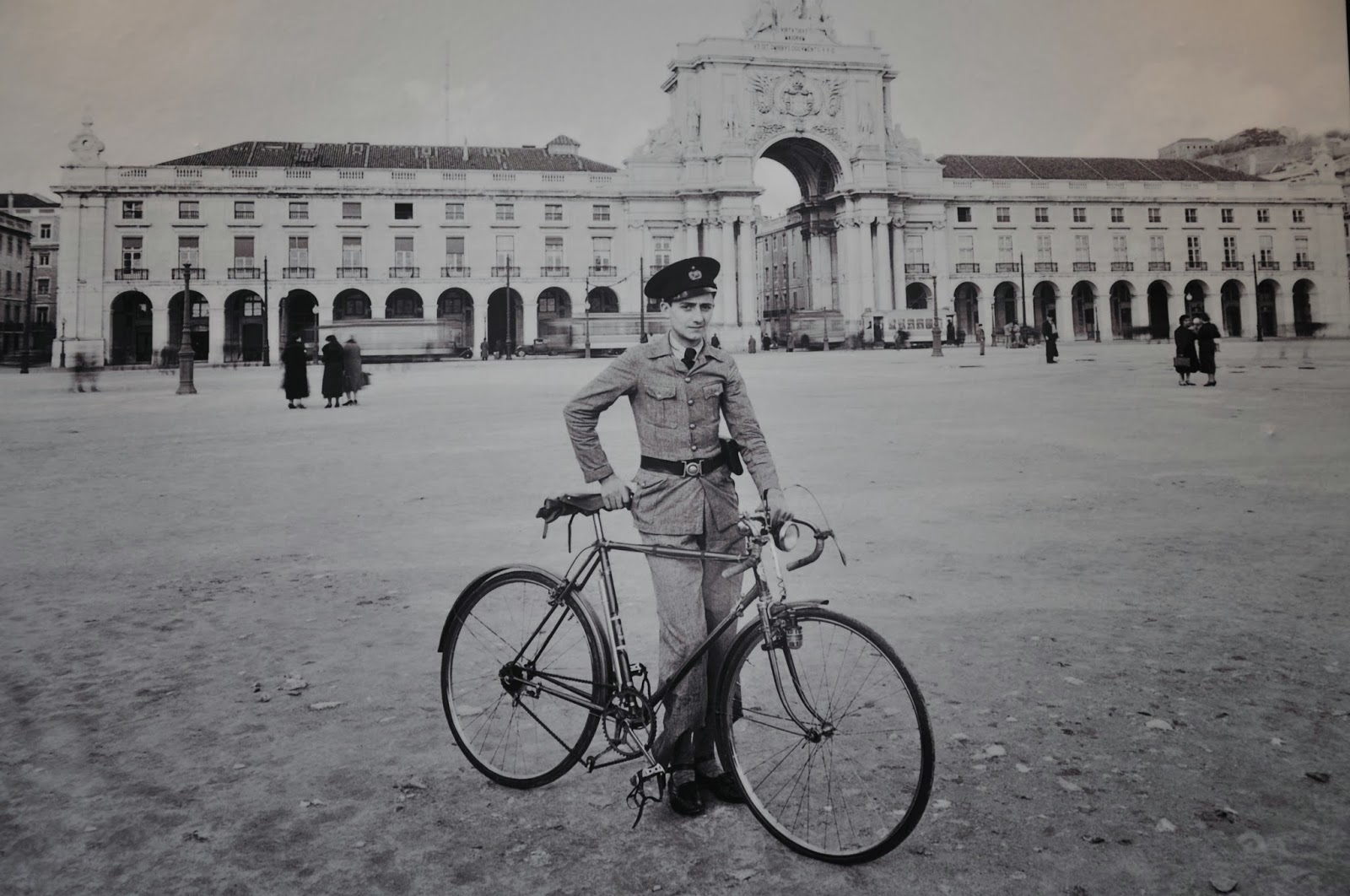


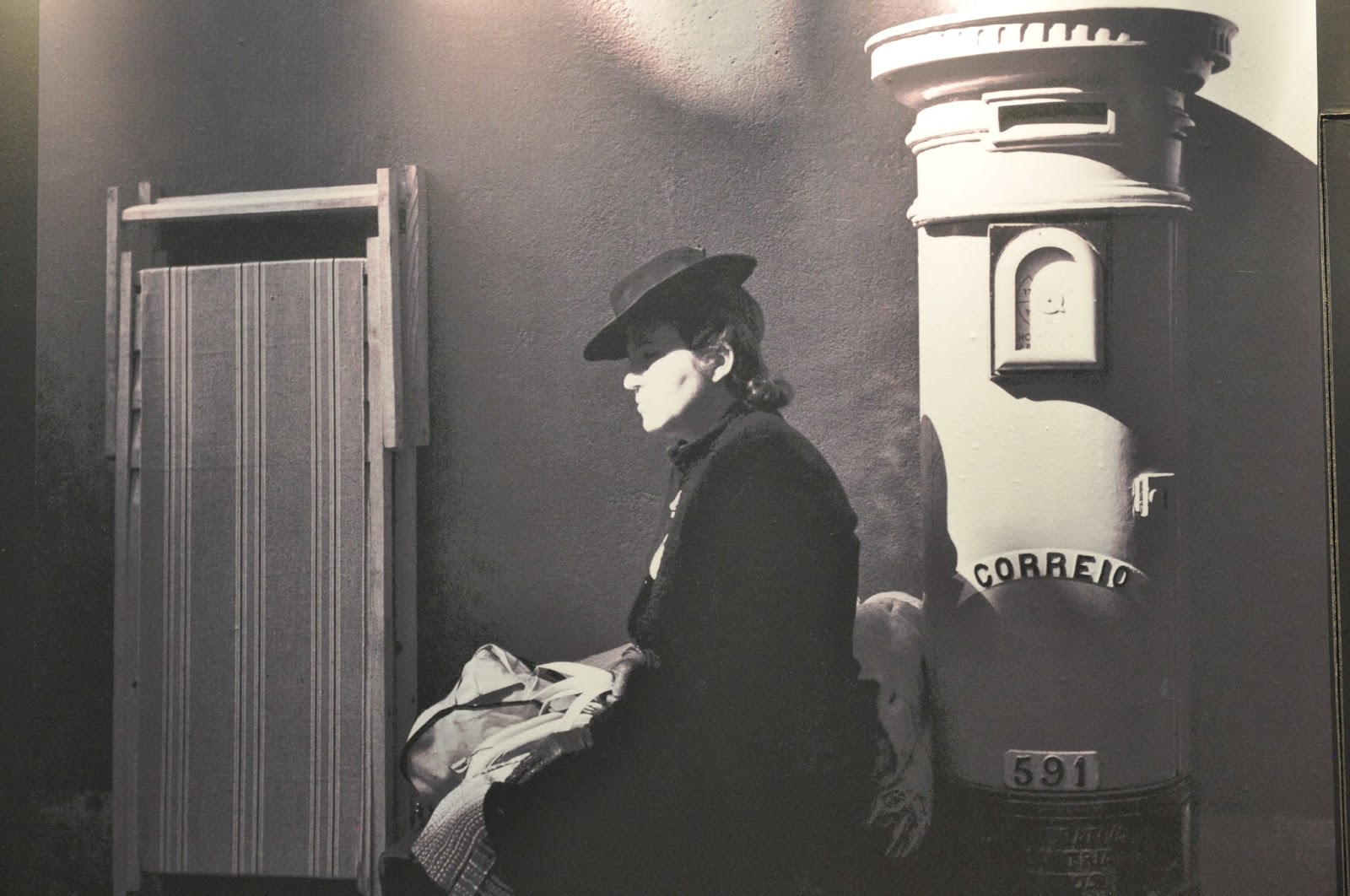
Post office advertisement (left). Postman in Lisbon before postal delivery (right).


Listening to the BBC - 15th of December 1941.


Calouste Gulbenkian with Saudi Arabian Sheiks at Lisbon airport in 1947 supposedly organising the evacuation of people at risk in occupied Europe.


Freda Josephine McDonald, later to be known as Josephine Baker served during the second World War singing for soldiers and above all having become a sort of underground courier for the resistance, she came to Lisbon (the only place where it was possible to hand information to the British in a rather safe way). She is said to have brought photographs and information about the German positions in France sewn into the lining of her mink coat and inside her bra, having twice brought dozens of pieces of information written in invisible ink amidst her music scores.


Queue of refugees at the door to the premises of the Foreign Residents' Police - Lisbon, 1939


Cars with foreign licence plates - Lisbon April 1940 (left).


But Lisbon was also used as a platform for exchanging prisoners and diplomats.


The photos depict a ship with axis diplomats about to be exchanged for diplomats of the allies.


"The ship weighs anchor in the darkness of the night
It was slowly turned and tugged down the Tagus
The centenary exhibition shone like in a fairy tale as we passed
Its magic light  was the last image we had of Europe surrounded in mourning."

Alfred Döblin


VE certificate delivered by  a private English School in Lisbon to its students (left). Celebrating Victory Day in the streets of Lisbon (right).


It is really worth visiting this temporary exhibition which will be on till the 15th of December.

Though the images related to what could be considered as a distant past I couldn't help thinking on the many who still nowadays desperately attempt to flee their war-torn countries or those under wars and conflicts and may never make to a haven as Portugal was for some back then. 


Friday, 25 October 2013

Les vaches de Staline by Sofi Oksanen


The fact that it has taken me one month to read "Les vaches de Staline" has little to do with not having liked reading it.

Sofi Oksanen's "Purge" fell into my hands almost by accident two years ago and because of the impact it had on me, as far as the author's writing skills are concerned, I tried to get hold of some of her other books since then, though the only one I had access to in Portugal has been this latest (in French), which was in fact her first romance.

A rather powerful account of three generations of women whose lives unfold in communist Estonia, capitalist Finland and/or between them "Les vaches de Staline" is definitely worth reading.


Monday, 21 October 2013

Domestic Violence highlighted ...


Despite the fact that several associations have been continually highlighting the domestic violence issues in Portugal and giving them a "face" these seem to keep on haunting our society and the number of battered and murdered women every year is still very high.


I couldn't help thinking about my daughter who dedicated her short life working for an association which provided and still provides support to such women the moment I saw this face, one of many spread in the capital city as part of an ongoing campaign.

How many more women will have to be murdered till we realise that each life is valuable and domestic violence a phenomenon our society, despite not being able to completely ban, has the obligation to at least be aware of ...

May the campaign lead to better results or some sort of "visibility" ...


Friday, 18 October 2013

Photos taken in Uzbekistan by Gerard Leroux ...


I was particularly touched  by the Leroux's thoughtfulness and that has got to do with having received some photos of myself taken in Uzbekistan by Gerard but it goes beyond that once they bring about memories of  special moments shared with both Gerard and Danielle.


 Talking to a road sweeper outside the hotel in Khiva


 Having dinner at a restaurant in Bukhara


 Photographing the Oulough Begh Observatory in  Samarkand


 Talking to some Uzbek ladies in the Shah-i Zindah Mausoleum ensemble in Samarkand


 In a shop in Samarkand (with Danielle, the shop owner and the shop assistant)


In a restaurant in Tachkent upon having been asked by one of the musicians to collect money  for their performance


 Outside the Ismail Samani Mausoleum in Bukhara (with Nathalie)


 In the streets of Bukhara with Danielle


Recent students ... students of the past ... students - September/October 2013


If teaching a new group is a challenge in itself being with students you hadn't seen  for quite a while ... some of whom you had given classes to twenty five years ago ... can also be a challenge.


Nuno, João, Mafalda, Isabel, Julio and Hugo (from left to right)


Carlos Jesus, Filipa, Shakir, Francisco, Roberto, Bruno and Suzana (from left to right)


Pedro, Eugénio and Manuel (from left to to right)


I do get attached to my students and despite the fact that I rarely have a chance to "accompany" their progress within the enterprise, particularly if they are sent to either Madeira or the Azores the moment we have the opportunity to be together again, be it for five minutes of five hours I seem to unexpectedly remember some of the things that happened in the classroom then ( moments ... details) and so do they ... 

These last weeks have been rather emotional because of the fact that I have been reminded to which extent I have had an impact on their lives and the opposite being equally right ...


Paris - The 17th and 18th of September 2013


The Uzbekistan Airlines flight I boarded in Tashkent landed in Paris at about 19H30 and I headed to my hotel in the Pigalle area without too much delay.

The following day looked rather grey ... in every sense and I don't think it was merely connected to the meteorological conditions, which were definitely not the best ... the sky was cloudy ... rain was beginning to fall ... but that in itself would have not been enough to make me feel "greyish blue" ... it was a lot more than that, and though I seemed to know why that was happening I was ironically not willing to change the "colours" of my Parisian day.

I wandered about Montmartre and Les Hales for a great part of the day to be back to the new hotel I was booked at in Ramey, which I didn't leave till the following day.


Never in my life, particularly taking into account the fact that I had been there several times before, had Paris looked and felt so grey ... the only tinge of vibrant colours having been the bed covers (ironically again ... in both hotels) ... red ...   a vibrant red, the presumed colour of happiness ...