Sunday, 20 November 2011

Cultural oriented weekends ...


I  do get enormous pleasure out of going to Art exhibitions and any other cultural venues, particularly if they are in accordance with my taste, though I have lately realised that the simple breathing in within any artistic atmosphere is important for my emotional balance ...

Among the several  temporary exhibitions I have been to in the last weekends, three have caught my attention for completely different reasons.


"Four centuries of European still-life painting" being exhibited at  Calouste Gulbenkian Museum presents a selection of works from the second half of the nineteenth century up to the mid-twentieth century, many of which are by leading painters, such as Manet, Monet, Van Gogh, Gauguin, Cézane, Dali, Magritte, Matisse, Picasso, among various others, including some well known Portuguese painters like Amadeo de Souza Cardoso, Mario Eloy and Vieira da Silva.

The fact that they are  organized by themes allows the visitors to explore the diversity of the various approaches in a fairly different way. Inspite of not being very keen on still-life type of paintings, I must recognise that I loved the whole ensemble, having focussed on four of those twelve exhibiting sections though - "Reflections on presence", "A play of relationships - the still life as form" and "structure and space".      


The catalogue of  "Four centuries of European still-life painting".


"Frida Kahlo, her photographs" on display  in Pavilhão Negro of Museu da Cidade brings together 250 photographs collected over her life time. Some of those I had never seen published in any of the books I have (and I have most of her books or books that mention her). An excellent testimony about her life through the eyes of various photographers (her included), which clearly complements the previous exhibition held in 2006, which brought to Lisbon many of her works, not to mention the fact that it is very well structured taking into account the space.


The catalogues of "Frida Kahlo, her photographs" and 'Vik". 


"Vik" - the works of Vik Muniz on display at the Cultural Centre of Belém in Joe Berardo's Foundation was a complete surprise. Having recently watched his documentary film "Extraordinary Garbage", which really impressed me not only because of the quality of his garbage paintings but the idea behind the whole project in Rios' garbage dump Jardim Gramacho and the way it affected people, led me to the  Cultural Centre of Belém (twice), having realised that the photos of his work could actually be photographed. Using perishable materials is a challenge in itself, but Vik Muniz' creativity goes well beyond that.


Pictures of sugar by Vik Muniz


Pictures of ketchup by Vik Muniz


Picture of chocolate ("After Hans Namuth")


Toy soldier pictures by Vik Muniz


Jardim Gramacho garbage pickers - pictures of garbage by Vik Muniz


Pictures of paper (after Van Gogh on the left) by Vik Muniz


Friday, 18 November 2011

Cape Verde (the morning of the last day) - Cidade Velha - the first of November 2011


(...)


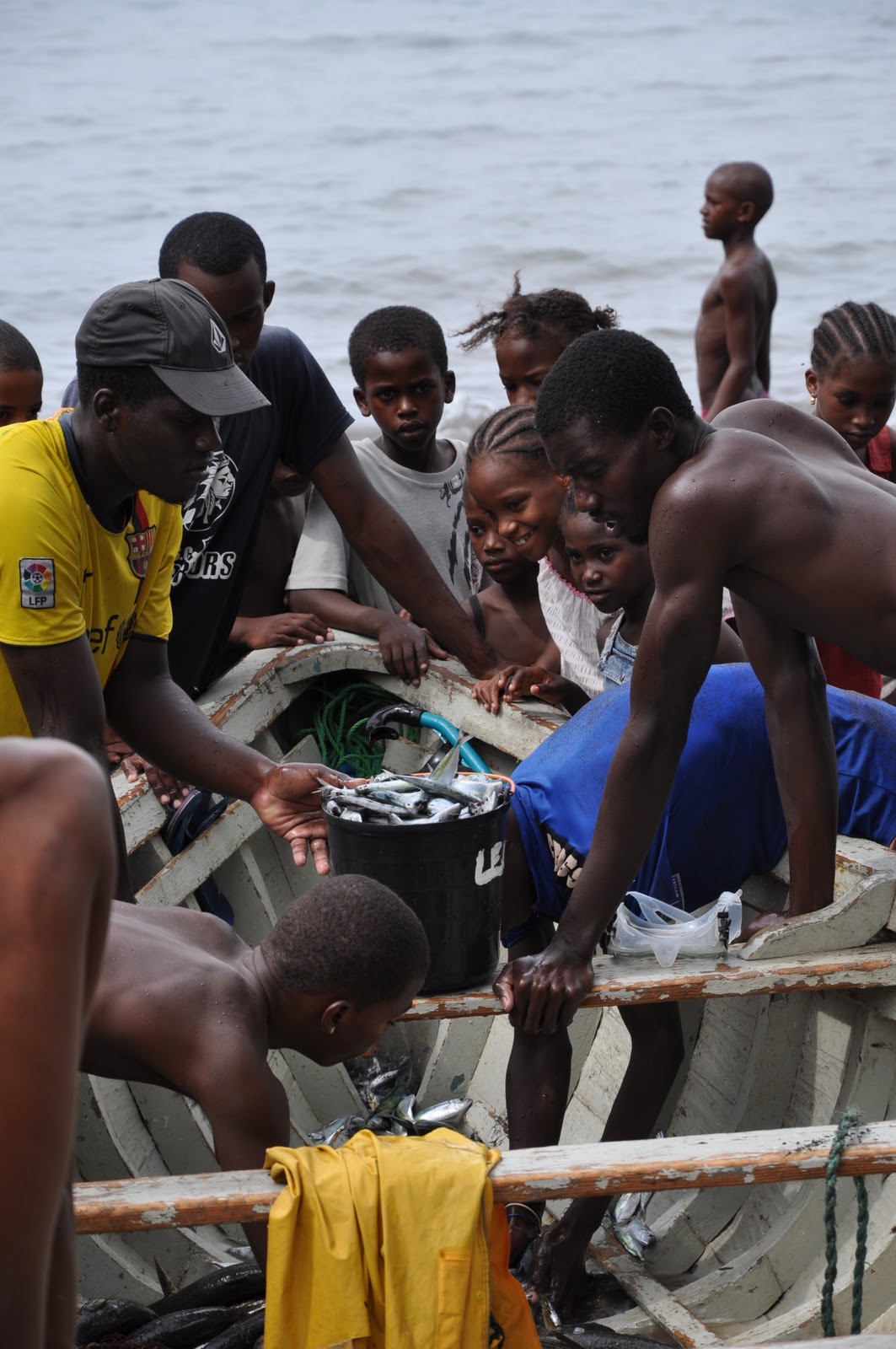
I watched the whole bustling  activity  going on around a fishing boat which had just been pulled ashore at Cidade Velha, as the fishermen selected the fish by size and species so as to sell them (I believe to the restaurants in the area) and distributed the small ones by the few children and adults who had come running the moment it "touched the beach".


The whole scene reminded me of my early childhood ... my grandfather and mother used to regularly take me to Figueira fishing harbour to watch the small fishing boats coming ashore ... and amidst the smell of fish and sweat ... I missed being a child again ... 


(to be continued)


Cape Verde (the morning of the last day) - The 1st of November 2011


The last day was almost entirely spent in Cidade Velha where I headed to in an "aluguer" boarded at Sucupira first thing in the morning. I never seem to get tired of going that way ... there is something quite relaxing and even inspiring about this village  among ruins of what "was once a pivot of Portuguese empire".


First photo taken as I walked out of the Pension.


The Pillory square is  where the "aluguers" drop us, which is also the centre of Cidade Velha, a permanent reminder of slavery and the harsh times slaves had to endure when punishment was carried out. In 1466, this village then named Ribeira Grande was an important transcontinental slavery port for trading slaves  from Guinea-Bissau and Sierra Leone to Brazil and the Caribbean and that we shoudn't forget.


I walked up and down along the shore watching the villagers in their daily chores ... women washing their clothes using  sea water and that harsh stone like soap I have never seen anywhere but in Africa ..., which eliminates all the stains ... but which also changes the original cloth colours. 


I then headed towards the further end on my way to the Church, as I could distinctly hear some church songs in the distance.


The Church of Nossa Senhora do Rosário over five centuries old, whose patterned blue tiles covering its walls are worth noting, together with the 17th century tombstones still to be seen on its floor, was finally visited by me ..., though in order to do so I had to attend a one hour mess. I was impressed by it, as well as the priest's discourse, I must confess ... a discourse focussed on  "endurance", patience ... and  hardships ... things I believe these villagers are commonly used to. 


As I walked out, decided to wander through the little roads (like Rua da  Banana) which are still lined with thatched houses, said to have been the first settlement. Some of them have been turned into bed and breakfast houses, which I'll have to try to stay at one of these days ...


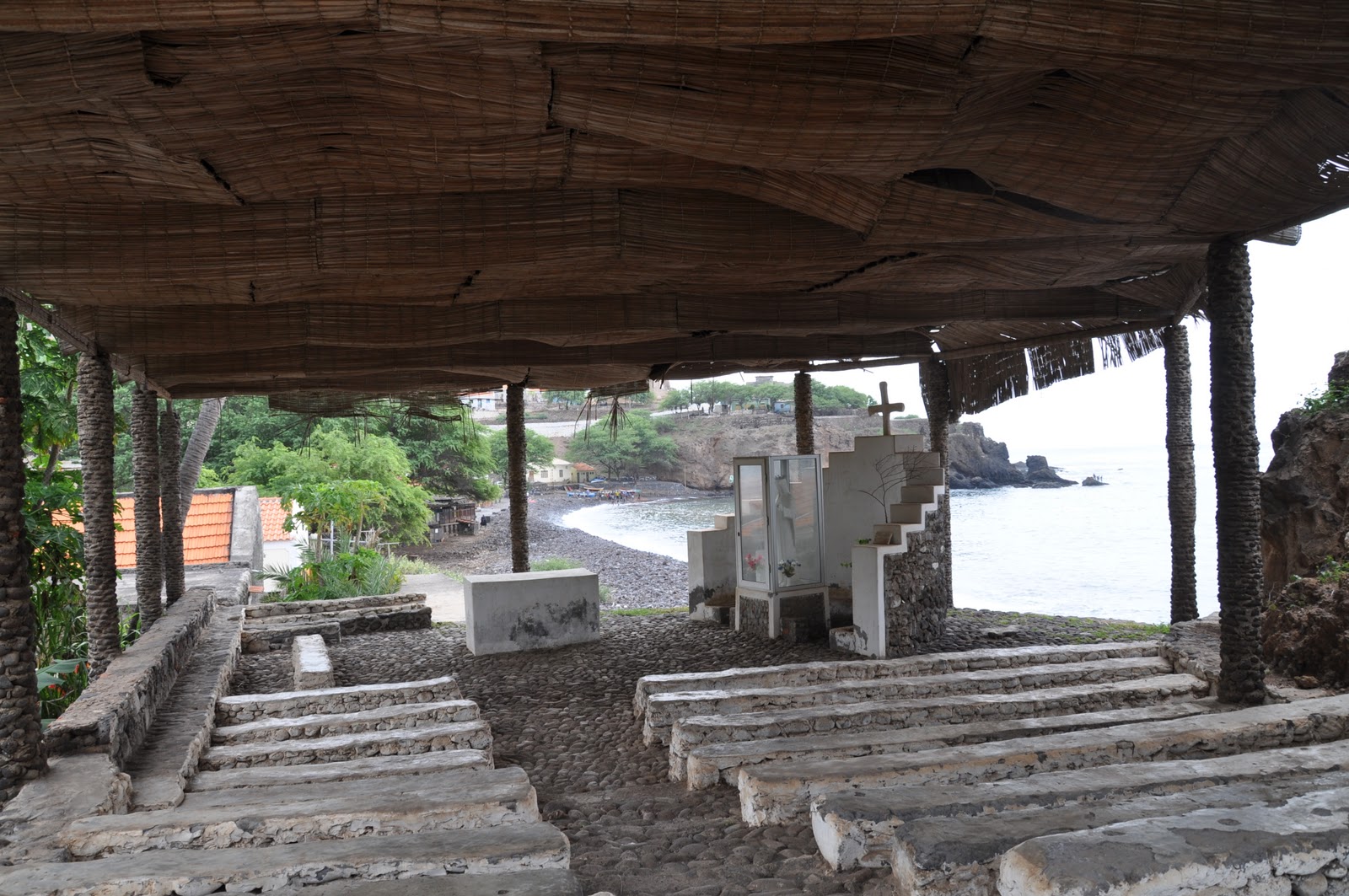
Because one year ago I climbed up to the Fort São Filipe this time decided to walk  towards Port Mosquito instead, though I just managed to walk as far as the community of Lagos.  On the way there I noticed an open chuch by the road  going up overlooking the bay and soon after a tree shrine in the opposite direction.  


Having walked back to the Pillory square and ordered a grilled fish to be prepared at the Pelourinho Café restaurant, while waiting for the meal to be ready I wandered further along the shore, as a fishing boat was being pulled onto the beach.


(to be continued)