Wednesday, 2 March 2016

No borders - artistic instalation by Izumi Ueda Yuu - temporary exhibition at Museu do Oriente - The 28th of February 2016


I have never been too keen on modern Art though I always try to get enough information on the contemporary artists and whenever possible see what their artistic production is about and I must confess there have been times in which I was touched by what I came across in some of their exhibitions.


Izumi Ueda Yuu is a name I had never heard of before. Having  read something she wrote for the presentation of her mixed artistic approach which includes painting, sculpted objects, printing and a wide variety of objects, drew my attention and led me to the room where her "intangible" artistic pieces were in display.


(...)  And I say "intangible" because according to her she uses the surface (the tangible) as the basis of her work and the starting point to telling stories of what lies within them, the inner life of those forms and objects.


Tuesday, 1 March 2016

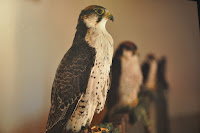
The Art of falconry from East to West - temporary exhibition at Museu do Oriente - The 28th of February 2016

I decided to head to Museu do Oriente on Sunday morning despite not knowing exactly what was on in there, as far as temporary exhibitions are concerned. I was soon pleased with the fact that for the price of one ticket I would be able to see three exhibitions, the art of falconry being the first one.
It comprised a wide variety of objects and artistic pieces therewith related, some of which I was told had not been exhibited before.
I felt it was particularly well organised in as much as it covered several periods of history, different approaches and displayed artistic artefacts, which I found to be of great value. 


Engraving from Encycoppedie Francaise - recueil de planches sur les sciences. les arts liberaux et les arts méchaniques by Diderot and d'Alembert - Paris, 1763 (left).


Canopy vase in alabaster  with a falcon-shaped lid containing the remains of a deceased person - Egypt - Lower period (left). 17th century Persian illustration (right).


Polychrome decorated ceramics depicting falconers on horseback - Iran, Qajar Dinasty - 19th century.


Polychrome porcelain plate - China -"Rose family" - 18th century.


Arab hunters - oil on canvas  - Alberto Pasini, Italy - 1865


Persian calligraphy (photographic reproduction) - Prayer adapted to the shape of a falcon - Mohamed Fathiab - late 17th century.


Falconer and his assistant  with two dogs - woolen tapestry - France (?) - 18th century.


Return from hunting - oil on canvas - Philips Wouwerman - 1640-1665


Ex-Libris with falconer.


The falconer - glazed tile panel by Henrique Costa Lopes Nunes - Santanna Factory - 1977


Falconry scene - glazed tile panel - 2nd quarter of the 18th century (1740-1750).


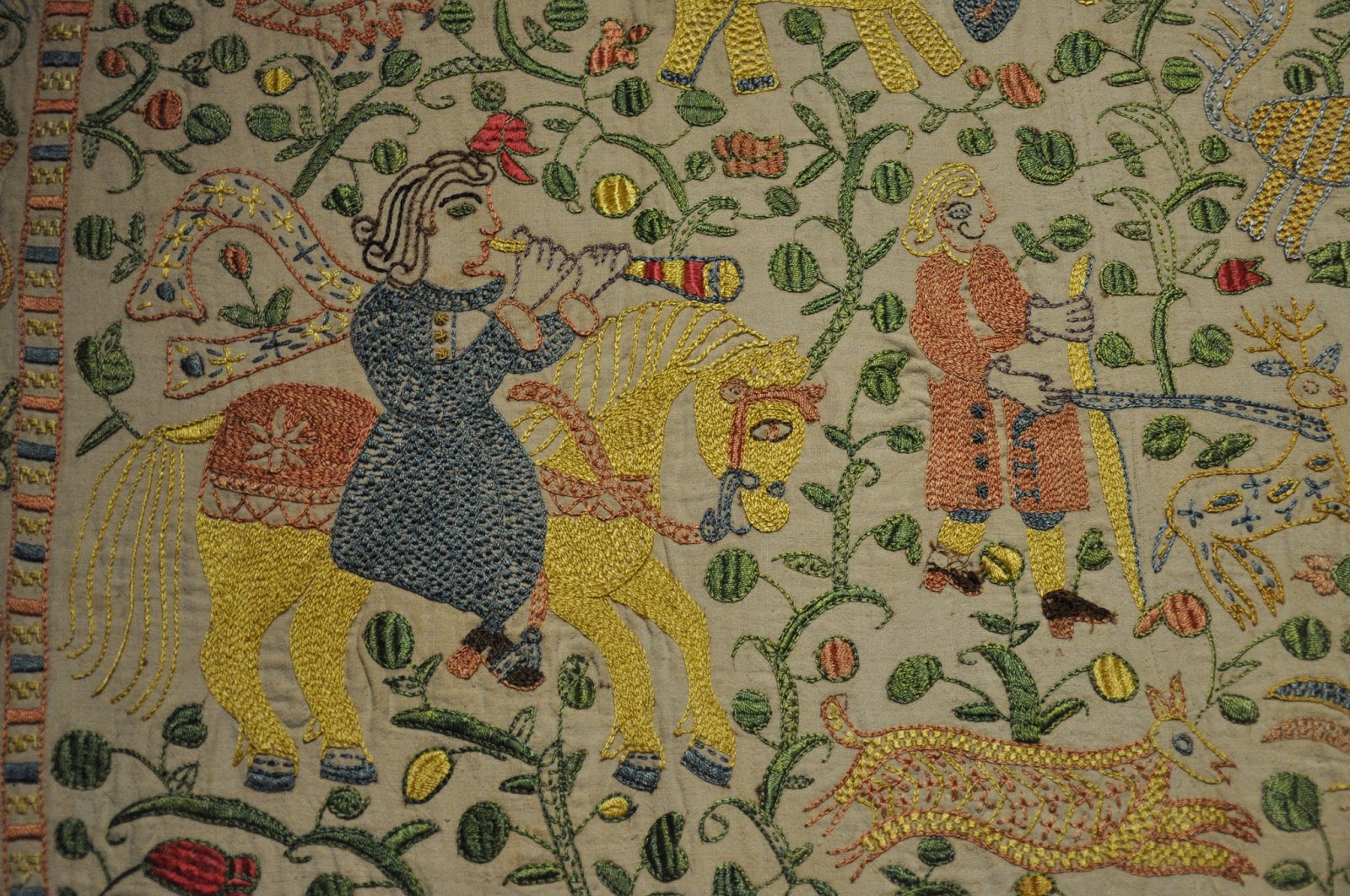
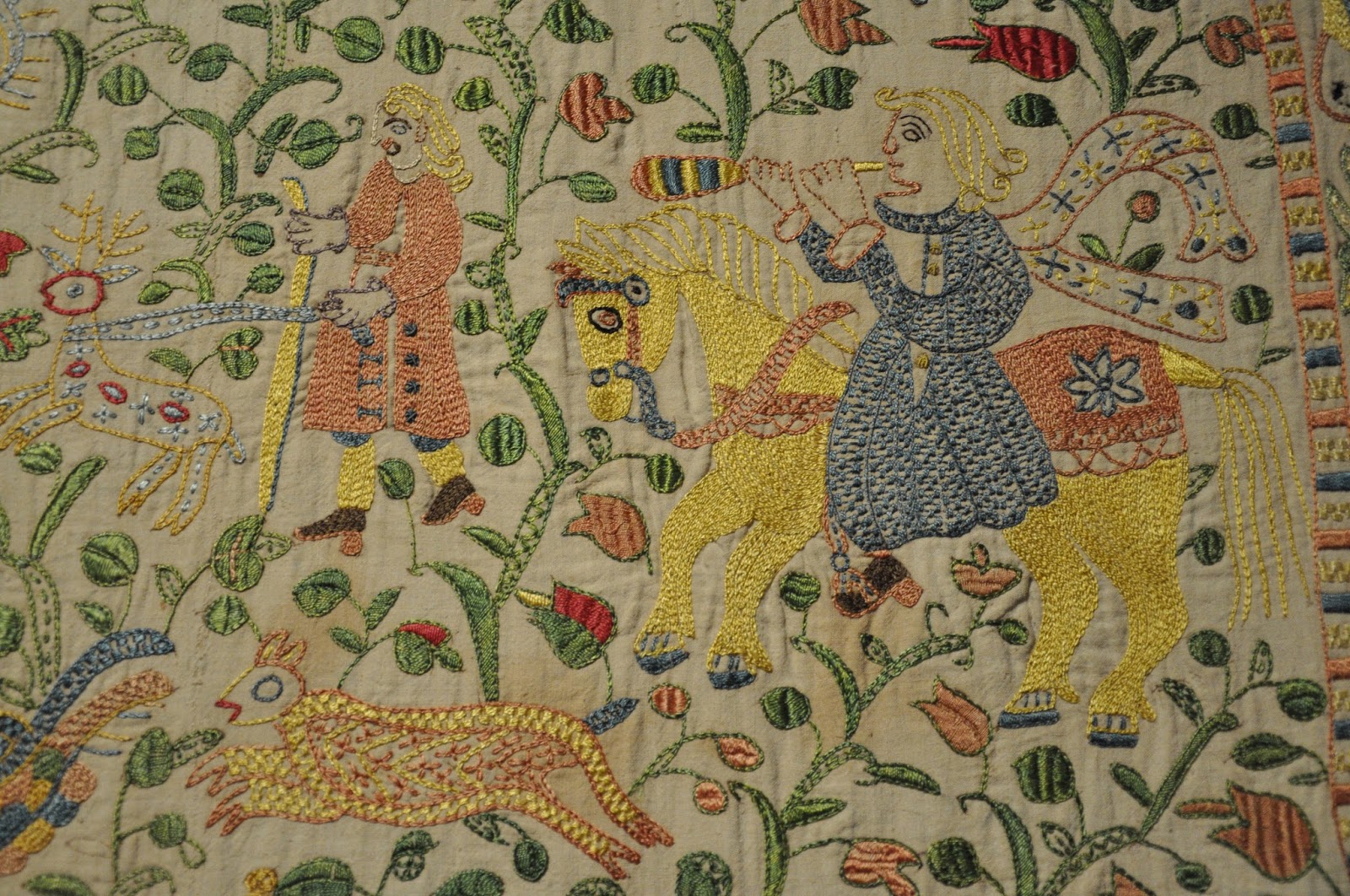
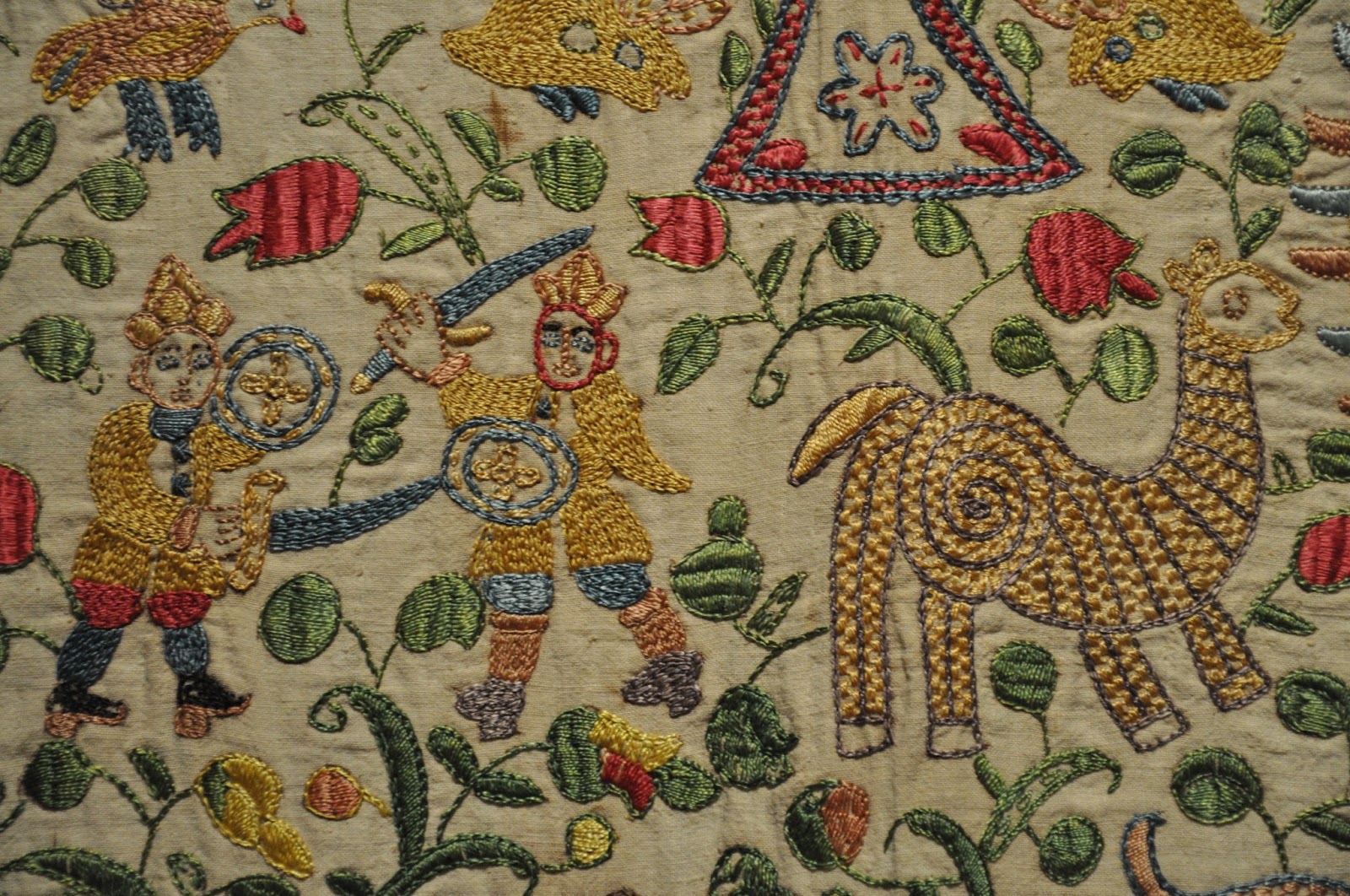
Quilt whose central theme is hunting - embroidered linen taffeta with polychrome silk thread - India (?) - 17th and 18th centuries.


Falconry across Arab countries, Uzbekisthan, Kyrgysthan, Japan, Taiwan, Pakistan and Portugal.


Having received due recognition from UNESCO with the importance of falconry being awarded the World Intangible Heritage classification this exhibition is undeniably a must.


On the National Theatre live transmission of As you like it by Shakespeare at Corte Inglês, Lisboa - The 25th of February 2016


Following our latest rather pleasant live transmission from the National Theatre Mia and I together with a Spanish metteur-en-scène Suzi took to Corte Inglês so as to watch As you like it live transmission last Tursday, despite the fact that I don't like to attend these type of venues during the week.


I must confess this theatrical piece by Shakespeare wasn't known to me but its synopsis did catch my attention and drew my interest particularly after having read some of the critics in regards to the scene setting and the contemporary approach.


I was especially fascinated by the interpretation of the character who played Jaques, Paul Chahidi,  though I can't exactly define whether it was his tone of voice or his facial expressions. There was something very peculiar about him that in my opinion "envigorated" his character. There were some incredible interpretations by Joe Bannister (in the main role of Orlando), Rosalie Craig (playing Rosalind) and Marc Benton (in the role of Touchstone) as well.


I must nevertheless partly agree with one critic who mentioned the visual concept potentially being  a "distractor". I was astounded with the forest of Arden visual concept and particularly the way it was majestically "built up" from the ordinary scenario.
 
 
Such was the inventive manner that had me wondering  for quite a while how it had been made possible, not to mention other distracting elements like the entrance of cast in Aran sweaters as they brilliantly impersonated sheep or the rather creative and innovative harmonies of the chorus or the interspersed chirping.
 
 
Dialogues became secondary at times and so did some performances though the overall feeling was one of ecstatic delight. Definitely one of the best cultural evenings in February.


"A stunning production with the most spectacualr scene change the National has housed in years." - Alice Saville - Time Out


"(...) you come out discussing the visual concept rather than the actors' performances." - Michael Bilington - The Gardian


Photos by Johan Persson