Tuesday, 14 April 2015

My "childhood" revisited ... - The 11th of April 2015


Whenever I go to Figueira I try to get hold of what  little remains from my childhood, despite the fact that it is sometimes painful not to be able to "identify" what once was and no longer is.


 I was therefore quite surprised to come across two buildings which were "important" when I was a child and a young adolescent - one (on the left) because of having been the place where I had my first ballet lessons under the direction of a French ballet teacher married to a well known Portuguese orchestra conductor and music composer, Freitas Branco and the other (on the right), a former medical clinic where I dared visit an injured friend (of the male gender) without a chaperone, which was highly unacceptable at the time.


Heading towards the public park, the former townhall, now turned into a bank brought back some memories of the past - it marked the limit between the old and the new town and from that point onwards everything we, as young adolescents, were willing to go to - the tennis club which often held parties, the casino with its no less interesting balls, the long stretches of sand lined with little bars and cafés ..., to mention just a few. 


The memorial statues which once stood in the park were substituted by fairly modern ones, which I must say I quite liked (at least they were a lot more creative and colourful).


As Mia and I headed towards the main beach of Figueira we came across an old black and white photo of the lighthouse, which now stands in the middle of a street, miles away from the sea which once used to reach its fortress-like walls. 


A few walking lanes and skate board areas have since then been "enbedded" in the scenario setting, so as to diminish the ever growing stretches of sand, resembling desert-like areas, which have entirely changed the previous layout of the coastal landscape. 


Two huge paintings decorate the seafront walking lane from the small fishing harbour to the main beach. One, looking western Europe style influenced (its author may be from one of those countries ... I honestly don't know ...)  stood proudly against the sea and made quite an impression on me ... I simply loved it and felt it made a real difference in the whole sea front scenario. 


To the left, a small beach I used to take my children to whenever we spent our holidays in Figueira remained "untouched". 


Having gone beyond the limit of Figueira and into Buarcos, a fishing village close by, we came across some of the "inventions" carried out by a former Mayor, which people still praise and take advantage of. A series of sports' courts along the beach, a savana-like area with a concert-like stage, as well as memorials to some of the outstanding figures of both Figueira and Buarcos.


Once we reached the old centre of Buarcos marked by an old statue of the fisherman pulling the fishing nets, we sat at a Japanese restaurant (another novelty) along the beach awaiting my brother's arrival.


Soon after lunch we decided to drive to Quiaios, a mere 15 kilometres from Figueira, where we visited an old windmill (in need of repair) and one of the three existing lagoons - Lagoa da Vela, the one which is easily accessed. Like the other two it is surrounded by dense shrubbery and although I didn't recall having ever been there part of the landscape rang a bell, possibly based on previous descriptions made by my brother, who often rode there on his bicycle.


Once we got back into town we decided to sit on a sea front café we used to go to in the past and be brought the same we used to have then, for old times'sake ...




Sunday, 12 April 2015

Family gathering for my mother's 92 year old birthday ...


Family gatherings are of utmost importance but more so when they involve a birthday of someone who turned ninety two years old and has always been the imposing and inspiring matriarchal figure of the family (even at a distance).


Having had to fly and drive from various cities the three of us managed to gather at my mother's for her birthday for the first time in a long time. Arrangements were secretly made and kept (which in our family is rather difficult when it comes to anticipated surprises).


Around a  restaurant table facing the sea, (which has been an equally important factor in our lives) we spoke and let her speak of everything that has marked our now rather diminished family dynamics ... in a sequence of moments we will not forget for a long time ... (of that I am absolutely sure). 


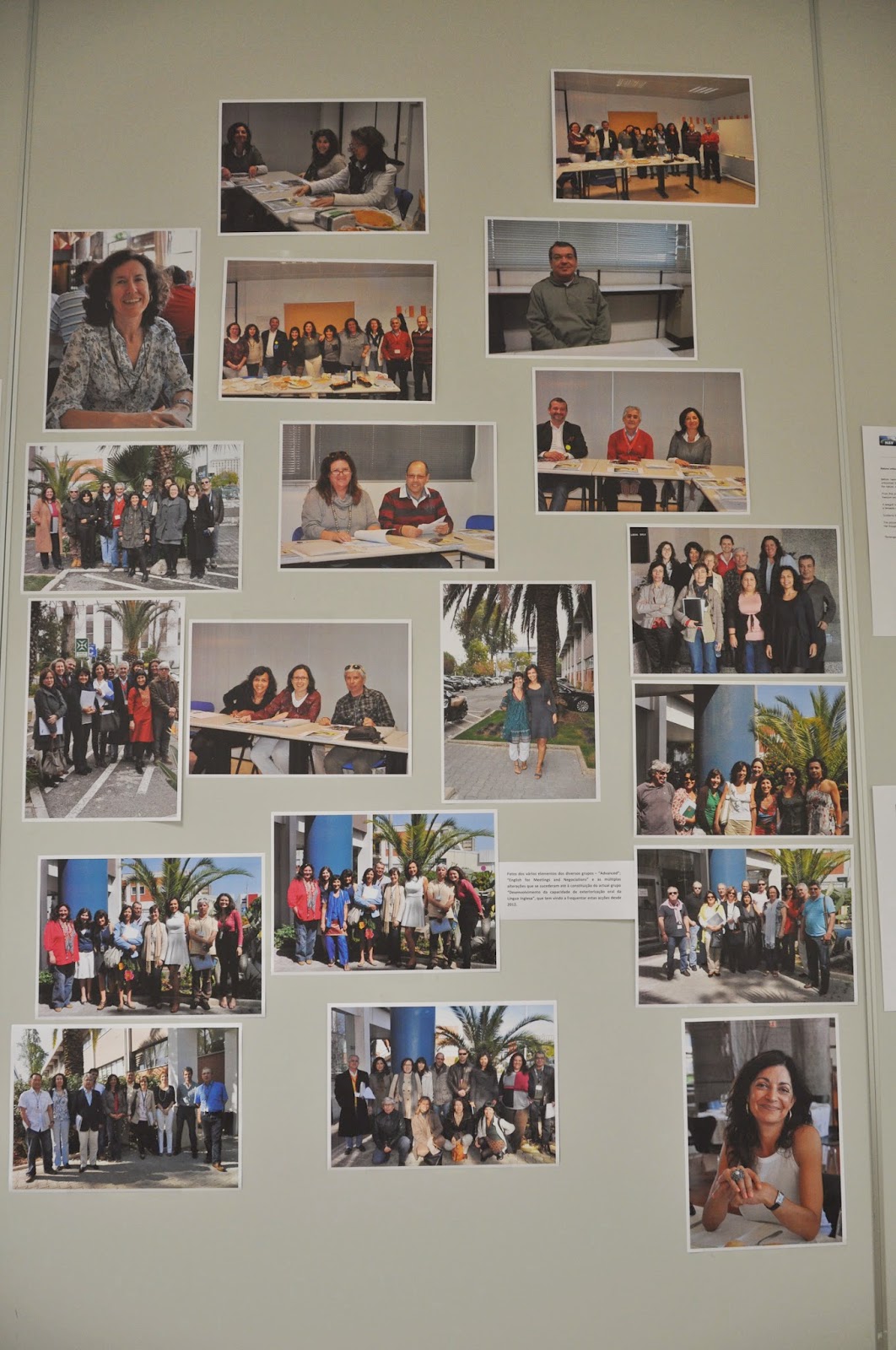
English Language students' working papers being exhibited at the Training Centre


As I came across the following quotation by Horace Mann " A teacher who is attempting to teach without inspiring the pupil with a desire to learn is hammering on a cold iron" I thought of the many students who will not go further beyond the minimum required level because of not desiring to or because of being deprived of "inspiring skilled" teachers.
 
 
The idea behind the exhibition of many of my students' written works was not only an appraisal in regards to what they have been able to accomplish in the English Language learning process but also an incentive for those who lack inner drive to take advantage of their potential, as well as (eventually) a subtle "awakening" for the many who consider they are fluent in English, when they can barely speak it. 


What can be said about some of those "inspiring works" !... which include the analysis of different versions in English of the same poem by Fernando Pessoa, essays on - "attachement being the greatest fabricator of illusions", the word "restless", extracts from the various films we discussed in the classroom "As one gets older one's fears subside" or "To let everyone down including ourselves" ... Not much more than what has been "exposed" ... those works speak for themselves ...
 
 
There are also descriptions of images done by different students (the author of the image and the one who was handed out that same image) with completely different literary approaches and writing styles ... and pictures of the students involved in this "battle of words" ... there's "poetry" ... there's commitment ... there's a lot more than can be accounted for ... and yet ... those works have a voice of their own ...


Poetry and especially Poetry translation (from Portuguese into English) was also discussed in the classroom, using some very good examples from the John O'Connor book - "Portrait of Lisbon" ... but that's not all ...  as one should also mention the numerous films that were the "mottos" for our endless discussions in English. 


The exhibit room was the actual classroom which could be accessed to by any Training centre resident teacher, students attending any other courses and even visitors with access to the building for a period of five days.
 
 
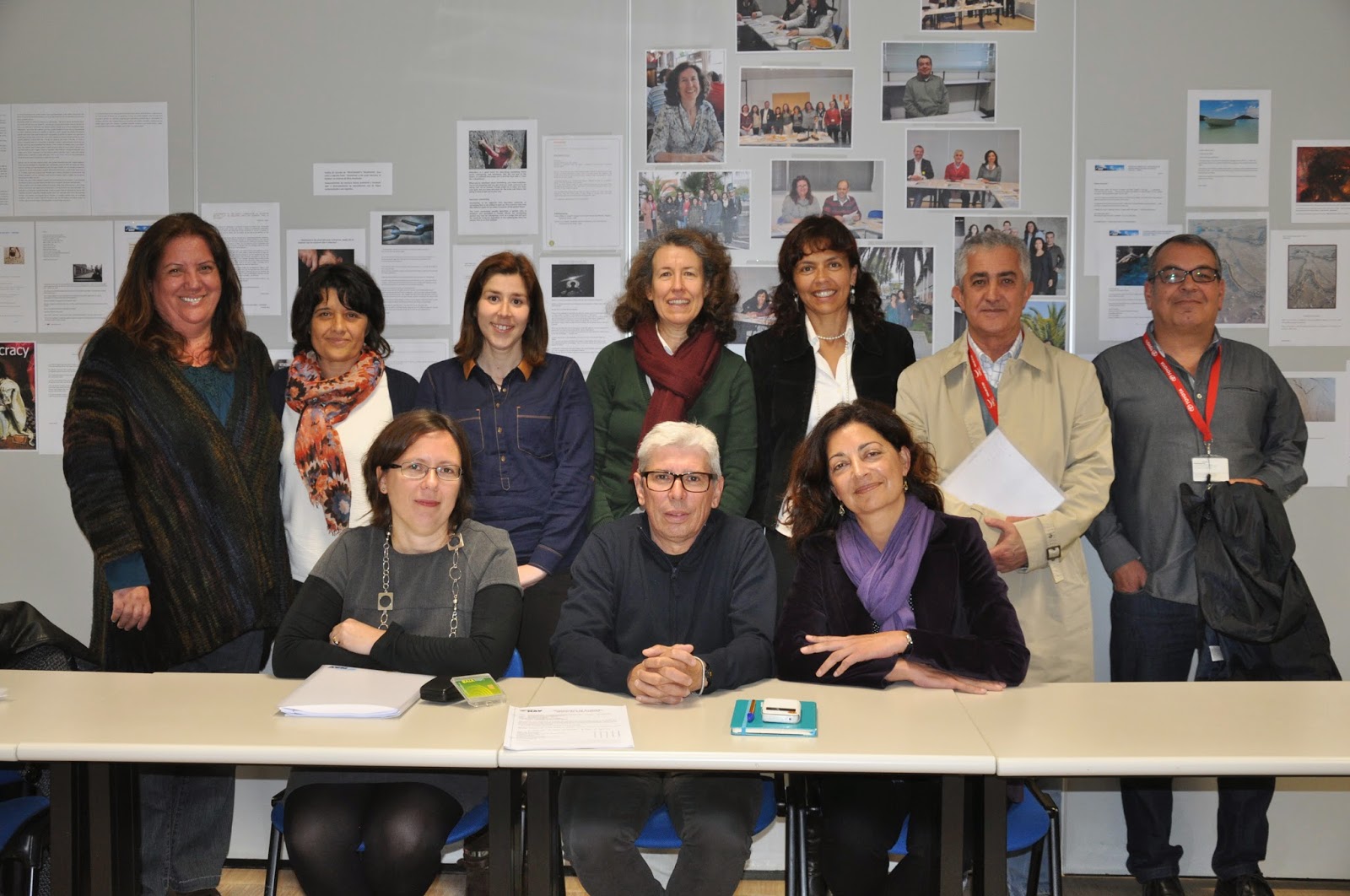
A book with those written works may eventually be published internally and other events therewith related may equally be carried out ... as it was mentioned in the closing session of the course presided by the head of the Air Navigations services on behalf of the head of the Centre and the head of the general Training services, which this course pertains to.


I felt immensely proud of all the students involved in this "project" and if it may be true to say that teachers must be inspiring  the same may apply the other way around ... and I owe a lot to the "inspirations" of those who attended the course ...


Thursday, 9 April 2015

Letters to a dictator by Inês de Medeiros


I have come across an awarded documentary which is rather interesting, to say the least, particularly in what concerns the "role" played by Portuguese women under a dictatorship regime and a period of obscurantism that went on in Portugal  for more than fifty years.


The starting point for the film were some letters found quite by chance at a second-hand bookshop dealer's (whose owner had not read them believing them to be love letters). Many of them did clearly express admiration for the handsome and charismatic Portuguese dictator, Salazar, who presided over Portugal for thirty years, as in accordance to what was written and openly read (either by the interviewer or the person who had written them). 
 
 
During the interviews some of the women, who penned those letters as an answer to a circular (never found) challenging them to mobilise in the name of peace, order and above all in defense of the "saviour of the motherland, admitted not to remember having written them and some were either incapable of justifying why they had done so or their justifications sounded rather inconsistent.
 
 
None of them seemed apologetic or regretful for having supported a dictator and some of them further enhanced their gratitude and admiration for the dictator, despite not being able to clearly justify why, once more.


The interviews are interspersed with black and white images of the epoch, many of which are not necessarily related to this event but provide the "scenario" for such a political setting. 


Although I was a young child at the time those letters were written I can easily relate to some of the events which occurred then, as well as confirm the role women were expected to play in society at that epoch once those ideas lingered on for much longer and young ladies continued being brought up as in accordance with some of those "principles".


I do agree with one of the critics " What a stimulating and sad film it is!" , but feel it should be seen by everyone, particularly members of the younger generation, who may not be aware of what Portugal was like then and the strenuous path women have had to walk to be able to take decisions based on their own opinions, if nothing else.