Tuesday, 5 March 2013

Venice, Rialto, Riva dei Sete Martiri, Piazza San Marco, Accademia - Day 2 (afternoon and evening) - The 1st of March 2013


(...)

We walked along the Strada Nova on our way back through the Rialto area towards San Marco Square, so as to have lunch at a local Pizzeria and continue along the Riva dei Sete Martiri.


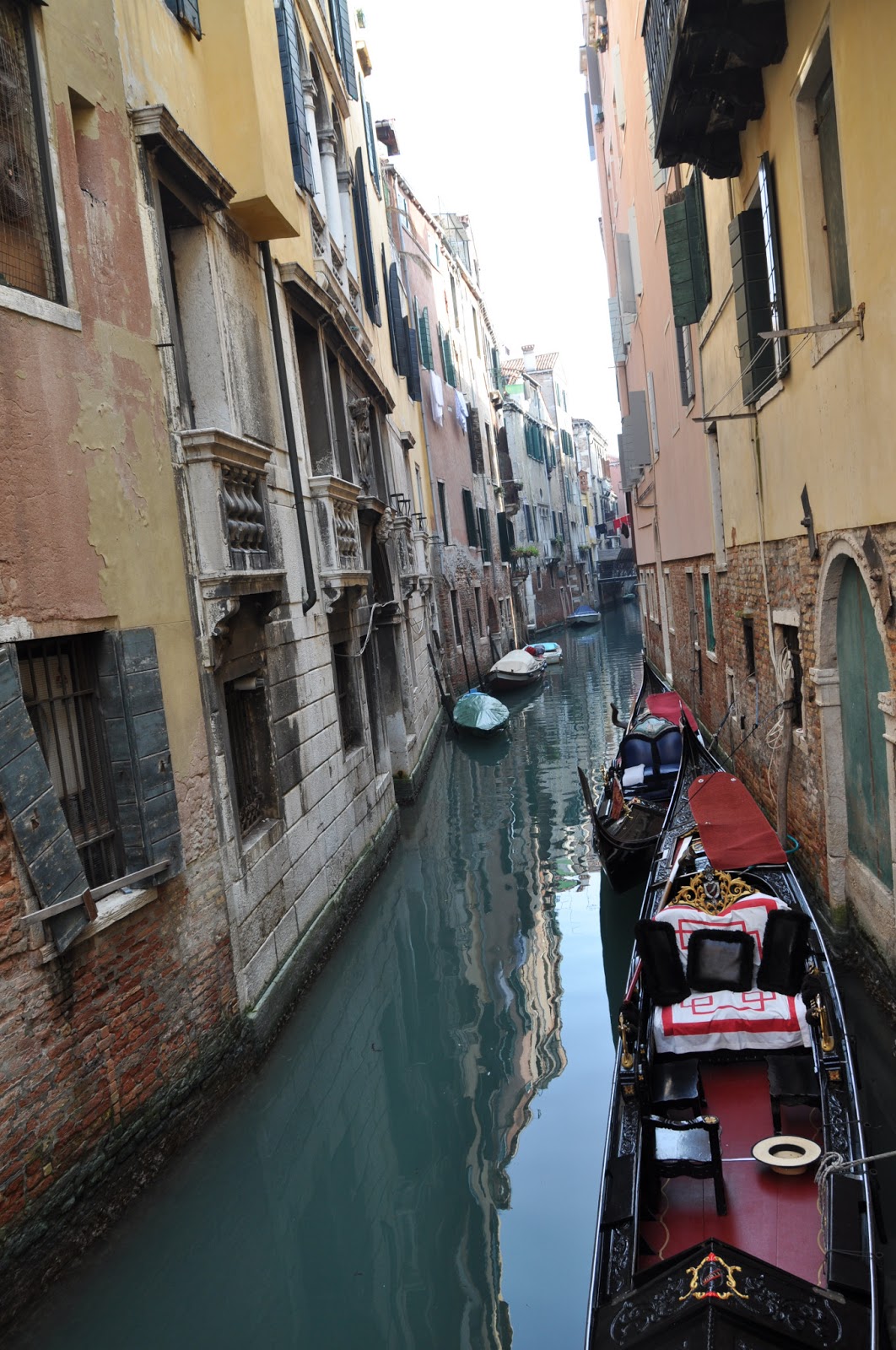


By the time we reached Piazza San Marco it was definitely more crowded than it had been in the early hours, though by no means overcrowded.


We then strolled  along the large seafront walk without any time constraints ... just taking advantage of the fine weather, the movement around the bay and the multiple views.

As we passed the Hotel Savoia Jolanda the name prompted me to unexpectedly think back to Savoie and la tour Yolande in Chambery ..., for no specific reason  and apparent connection but its name.


Along the river we came across a few statues related to World War II, with the one depicting  a lifeless lady represent every woman who took part on it being the one which impressed me most.


On the way back to the Piazza I couldn't help photographing some of the delicate 14th and 15th century capitals of the columns of the Doge's Palace whose carvings, amongst others, were representations of the months of the year, flowers and moral oriented scenes, such as the Drunkenness of Noah.


We picked up our backpacks at the hotel and walked in the direction of the Ponte d'ell Accademia, in whose area our new hotel was located.


Walking across the Great Canal I noticed a few "love lockers" attached to the bridge, like I have seen in many other places and wondered how many people still believe it will work ... I just wish I could believe it to be that easy ..., which I don't ... or might it simply a question of strong belief?

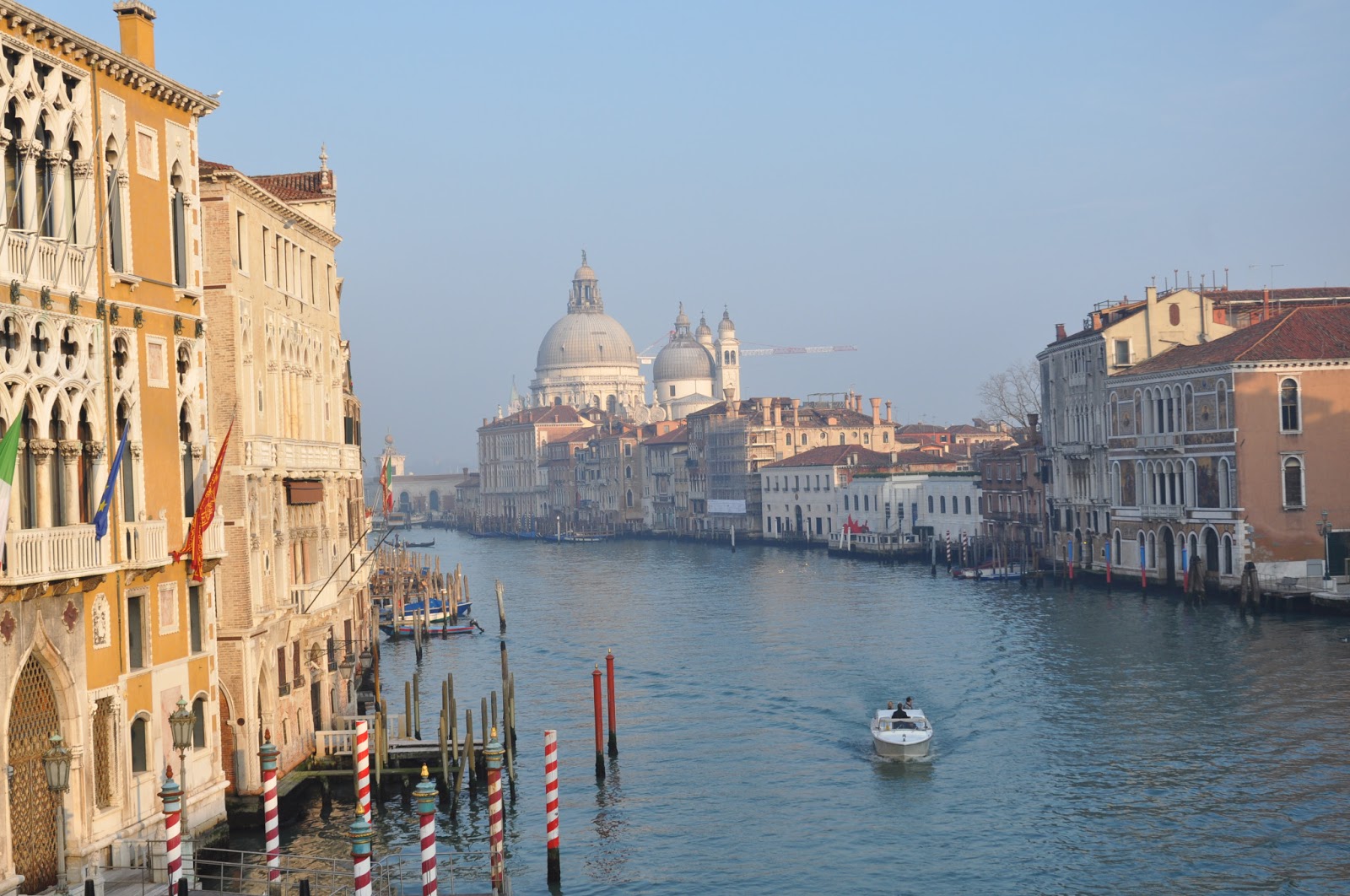


Not to dissimilar from the previous hotel, this one had quite a cosy inner garden and a rather "inviting"  entrance hall though ...


Tired out from having walked all day long we just ventured along the seafront as far as San Basilio, where three female musician statues stood ... and there we stood ourselves listening to the "silenced" melody as the sun slowly went down ... before heading back to the hotel ...


Monday, 4 March 2013

Venice, across the Venetian Lagoon, Campo dei Mori and Campo Ghetto Nuovo - Day 2 (morning) - the 1st of February 2013


(...)

We left Burano island and got on our boat ride back to Venice. The sun was beginning to shine and we had the distinct feeling that we were in for a beautiful day.

Just by looking around and admiring  the colour of the sky blending with the sea made me  feel momentarily happy ... 


The Murano brick-walled glass-making houses could be seen on our right and with them the "vision" of such an artistry. It is said glass making artisans enjoyed immunity from prosecution throughout the High Middle Ages and Early Renaissance, which ultimately reinforces the high honour attributed to this Art.


On our ride back we passed by the island of San Michele, which has become the city's cemetery and is therefore occupied only by churches and ranks of tombs.


Having set foot on the "mainland" we decided to explore one part of Cannaregio - Campo dei Mori and the Ghetto Nuovo.

Many houses seemed fairly old and not  too well looked after, though I must admit I didn't dislike the atmosphere ... there seemed to be a certain degree of romanticism filling the air ... and some quiet little corners along the canals looked like ideal places to simply sit by and let one's feelings "fly" ...


The notoriety of Campo dei Mori seems to arise from the three Arabian-style Moor statues said to represent three silk merchant brothers - Robia, Sandi and Alfani Mastelli, who had moved from Morea (The Peloponese) thus having originated the "Mori" reference, though a second theory behind the name suggests that as the Arab merchants' warehouse had been located on the campo in front of the brothers' house and once the Venetians confused the two races it started being referred to as such.


Close to the turbaned statue stands the house where the famous painter Tintoretto lived from 1574 through to 1594.


We then walked a little farther till we finally reached Campo Ghetto Nuove, which is said to have been sealed by a series of locked gates at night not having allowed Jews to walk freely about, with the exception of the doctors, one of their three possible choice of professions, apart from dealing with second-hand clothing and money lending.


On one side of the Square, on what happens to be the Holocaust Monument  we could see some bronze reliefs with scenes from the Holocaust made by a Lithuanian survivor.

Some of those were quite impressive, I must say.


(To be continued)